
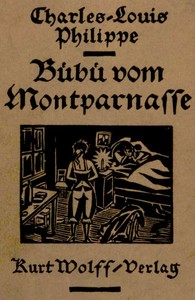
Bübü vom Montparnasse by Charles-Louis Philippe
Let's set the scene: Paris, around 1900. The Eiffel Tower is up, artists are flocking to Montparnasse, but for many, life is a daily scramble. This is the world of Charles-Louis Philippe's Bübü vom Montparnasse.
The Story
The book follows Bubu, a petty criminal and pimp who isn't some cartoon villain, but a product of his harsh environment. He meets Berthe, a kind but naive working-class girl, and their relationship becomes the story's aching center. Bubu pulls Berthe into his world of streetwalking, not with grand evil, but through the slow, crushing pressure of need and a twisted sense of provision. We see their life together—the fleeting moments of tenderness, the constant anxiety of the police, the grim transactions, and the physical decay that comes with the life. The plot isn't about big twists; it's about the inevitable downward spiral. We watch as hope is chipped away, replaced by a numb acceptance of a fate that seems written from the start.
Why You Should Read It
This book got under my skin. Philippe writes with a quiet, observational style that refuses to judge his characters. He just shows you their lives, and that makes it all the more powerful. Bubu and Berthe aren't heroes or monsters. They're people trying to get by in a society that has already written them off. Reading it, you feel the chill of their room and the weight of their silent despair. It’s a masterclass in creating empathy for characters who are often invisible in literature. The themes—poverty, systemic failure, the corruption of innocence—are handled without a shred of melodrama. It feels honest, which is what makes it so heartbreaking.
Final Verdict
This is a book for readers who love character-driven stories and aren't afraid of a narrative that leaves you a bit heavy-hearted. Perfect for fans of gritty historical realism, like the works of Émile Zola, but in a more concentrated, intimate dose. It’s also a great pick if you're interested in the raw, unglamorous side of Belle Époque Paris. Fair warning: it's not a cheerful escape. But it is a profound, beautifully written look at humanity in the shadows, and it absolutely deserves to be read.
There are no legal restrictions on this material. It serves as a testament to our shared literary heritage.
Betty Hernandez
11 months agoBased on the summary, I decided to read it and the storytelling feels authentic and emotionally grounded. I couldn't put it down.
Richard Williams
10 months agoHigh quality edition, very readable.
Melissa Jones
5 months agoGreat digital experience compared to other versions.
Charles Jones
7 months agoAmazing book.









Aiden Lewis
4 months agoWithout a doubt, it challenges the reader's perspective in an intellectual way. Thanks for sharing this review.