
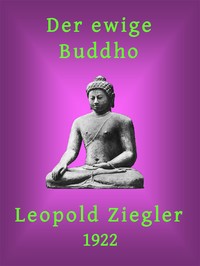
Der ewige Buddho: Ein Tempelschriftwerk in vier Unterweisungen by Leopold Ziegler
Leopold Ziegler's Der ewige Buddho (The Eternal Buddha) is a strange and fascinating creature. Published in 1927, it presents itself as a newly translated 'temple scripture' in four instructions. But here's the twist: the ancient text is a complete fabrication, and the wise scribe is Ziegler himself, a German philosopher.
The Story
There's no narrative with characters or events. Instead, Ziegler constructs a philosophical system from the ground up. The book is divided into four 'instructions' that mirror the structure of foundational Buddhist texts. He lays out a path of wisdom, exploring the nature of suffering, the illusion of the self, and the path to liberation. He writes with the authority and poetic gravity of an ancient master, creating parables and meditations that feel both timeless and entirely new. The 'story' is the unfolding of this invented wisdom tradition, presented with complete sincerity as a lost spiritual classic.
Why You Should Read It
This book captivated me because of its breathtaking audacity. It's not a commentary or an analysis. Ziegler gets his hands dirty in the clay of creation. You're not just learning about Buddhist concepts; you're watching a Western mind try to build a Eastern philosophy from its first principles. The result is incredibly respectful and deeply weird. You can feel Ziegler's struggle and his brilliance on every page. Is this cultural appropriation or the highest form of flattery? The book forces you to ask those questions. It's also surprisingly accessible. Stripped of academic jargon, his prose in these 'instructions' is clear, poetic, and often moving. You get genuine spiritual insight alongside the intellectual spectacle.
Final Verdict
This is not for everyone. If you want a straightforward guide to Buddhism, look elsewhere. But if you're a reader fascinated by the crossroads of philosophy, religion, and creativity, this is a hidden gem. It's perfect for anyone who enjoys books that break form, for fans of philosophical fiction like Borges, or for those curious about early 20th-century Europe's obsession with Eastern thought. Prepare to be confused, intrigued, and ultimately impressed by one man's attempt to write a sacred text for a faith not his own. It's a unique and unforgettable reading experience.
This text is dedicated to the public domain. Use this text in your own projects freely.
Kevin Gonzalez
1 year agoGreat reference material for my coursework.
Steven King
1 year agoHaving read this twice, the pacing is just right, keeping you engaged. I would gladly recommend this title.
Brian Hill
10 months agoMy professor recommended this, and I see why.
Oliver Williams
1 year agoThanks for the recommendation.
Carol Rodriguez
9 months agoFive stars!