
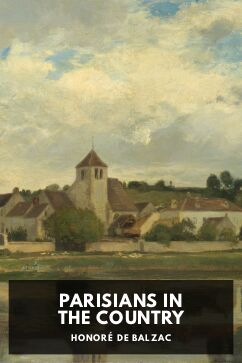
Parisians in the Country - Honoré de Balzac
Honoré de Balzac’s Parisians in the Country is a short, potent story from his massive La Comédie Humaine. It doesn't need a thousand pages to make its point; it's a swift, precise jab at human vanity.
The Story
The tale follows Monsieur and Madame de Montcornet, a wealthy couple from Paris who buy the beautiful estate of Les Aigues in rural Burgundy. They see it as a charming retreat, a playground. They arrive with plans to renovate, landscape, and bring 'Parisian grace' to the countryside. They expect the peasants to be grateful for their presence and their modern ideas.
But the local community, led by a shrewd and resentful former soldier named Sibilet, sees them not as benefactors but as invaders. A cold war begins. The locals engage in petty theft, sabotage, and a campaign of quiet resistance. Every well-intentioned reform by the Montcornets is met with subtle defiance. The Parisians, utterly clueless about the land and its people, grow frustrated and isolated in their own paradise. The story becomes a slow-burn account of a culture clash where no loud battles are fought, but a whole world of understanding is lost.
Why You Should Read It
What struck me is how modern this 19th-century story feels. Balzac isn't just writing about Paris vs. the provinces; he's writing about any clash between an entitled outsider and a rooted community. The Montcornets aren't evil—they're just painfully naive. Their sin is assuming their money and taste give them authority. You'll cringe with recognition at their missteps.
Balzac’s genius is in the details: the stolen fruit, the diverted stream, the gossip that poisons the well. He shows how power isn't always about shouting; sometimes it's in the stubborn refusal to cooperate. It’s a brilliant study of passive aggression on a societal scale.
Final Verdict
This is a perfect bite-sized entry into Balzac’s world. It’s for anyone who loves sharp social satire, stories about misunderstandings, or classic literature that doesn't feel dusty. If you enjoy Jane Austen’s commentary on class or George Eliot’s portraits of community, you’ll find a kindred spirit here. It’s also surprisingly quick and witty. Don’t expect a sweeping romance or a murder mystery. Instead, get ready for a masterfully observed, quietly devastating comedy of manners that asks a timeless question: Do we ever really own a place, or does it own us?
This work has been identified as being free of known copyright restrictions. Thank you for supporting open literature.
Linda Scott
1 year agoSurprisingly enough, the character development leaves a lasting impact. I couldn't put it down.





Carol Moore
2 months agoI stumbled upon this title and it provides a comprehensive overview perfect for everyone. I will read more from this author.