
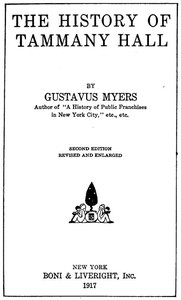
The History of Tammany Hall by Gustavus Myers
Gustavus Myers doesn't just list dates and names. He tells the story of an idea that became an empire. It starts in the late 1700s with a fraternal club named after a Native American chief. But this club had bigger ambitions. Over decades, it transformed into a political powerhouse that didn't just influence New York elections—it decided them.
The Story
The book follows Tammany's journey from its founding through its peak in the 1800s. We see how it mastered the art of the political favor. Need a job, help with the law, or coal for the winter? Tammany's local ward bosses would provide, no questions asked. The only price was your vote on election day. This created an unbreakable loyalty among the city's exploding immigrant population. Myers shows us the key figures, especially the infamous William M. Tweed. Through kickbacks, fake leases, and inflated invoices for things like a courthouse that cost more than Alaska, Tammany's leaders siphoned millions from the city treasury. The story builds to the investigations, the newspaper exposés (especially by the New York Times), and the dramatic fall of the Tweed Ring in the 1870s. But Myers makes it clear: defeating one boss didn't kill the machine. Tammany adapted and survived for generations.
Why You Should Read It
This book clicked for me because it's about more than old politics. It's a blueprint for how power works. You see how a system can be built not on ideals, but on personal connections and concrete needs. The characters aren't just villains; they're brilliantly pragmatic operators who understood their community's hunger for stability and recognition. Reading it, you'll constantly see echoes in today's headlines about machine politics, government corruption, and the tension between public service and personal gain. It’s a masterclass in real-world political strategy, for better and much, much worse.
Final Verdict
Perfect for anyone who loves narrative nonfiction, true crime fans interested in white-collar schemes, or viewers of shows like Boardwalk Empire and The Gilded Age. It's also essential for New Yorkers curious about how their city was really built. While it's a detailed history, Myers writes with a clear point of view against the corruption he's documenting, which gives the story drive and moral weight. Be ready for a lot of names and backroom deals, but if you stick with it, you'll get an unforgettable look at the engine room of American urban history.
This content is free to share and distribute. Preserving history for future generations.
Andrew Jones
6 months agoI came across this while browsing and the emotional weight of the story is balanced perfectly. Exceeded all my expectations.
Elijah Wright
9 months agoWow.
Donald King
9 months agoThanks for the recommendation.
Amanda Rodriguez
1 year agoFast paced, good book.






Jackson Miller
1 year agoFinally found time to read this!