1

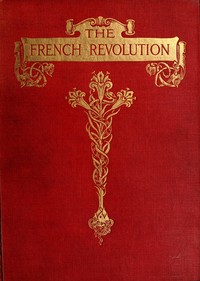
The French Revolution: A History — Reading Notes
(0 User reviews)
1556
Project Gutenberg
2006
Not confirmed
France -- History -- Revolution, 1789-1799; France -- History -- Louis XVI, 1774-1793
Readers of public-domain and historical texts
Project Gutenberg digital edition
en
Edition facts
Words
314,674
Reading time
1369 min
Text sections
169
For The French Revolution: A History — Reading Notes, the stored edition analysis reports 314,674 words, 22 hr 49 min estimated reading time, and 169 detected text sections.
The text analysis averages about 21.5 words per sentence, while the detected sections provide another way to judge how the source is divided.
Project Gutenberg metadata also associates the work with “France -- History -- Revolution, 1789-1799,” connecting these edition facts with the source record’s subject description.
Source:
Project Gutenberg record #1301
Thomas Carlyle's history of the French Revolution, written in a distinctive prophetic style, blends vivid character sketches with philosophical commentary. The catalog subjects list France's Revolution and Louis XVI's reign, but the excerpts reveal a focus on symbolic acts, parliamentary procedure, and the author's moral judgments, often diverging from straightforward political narrative.
Read the complete public-domain text at its original source.
Read on Project GutenbergThomas Carlyle's The French Revolution: A History opens not with a calm preface but with a table of contents that already signals its idiosyncratic approach: chapters titled 'Death of Louis XV,' 'The Paper Age,' and 'Windbags' suggest a work more invested in rhetorical force than dry chronology. The catalog subjects—France's Revolution and Louis XVI's reign—imply a conventional political history, yet the excerpts show Carlyle weaving together parliamentary debates, crowd actions, and his own vehement asides. He refers to the Constituent Assembly as 'moribund' and describes its members as 'Solon-like' in self-denial, mixing classical allusion with irony. The text is dense with capitalized abstractions ('Constitutional Great Council, Collective Wisdom, and National Palaver') and sudden shifts from narrative to exclamation, as when he notes 'Happily and unhappily there is no Mirabeau now to thwart.' This is history as dramatic monologue, not neutral report.
Carlyle's Prophetic Voice and Moral Framing
The excerpts reveal a narrator who constantly judges events and figures. The Constituent Assembly's self-denying ordinance is called 'cheap magnanimity' on Robespierre's part, and the phrase 'incorruptible seagreen Robespierre' appears with evident irony. Carlyle does not simply recount that the Assembly finished its mission; he has President Thouret utter 'memorable last-words' with a 'strong voice,' as if staging a theatrical finale. This moralizing tone is consistent with his broader project: he treats the Revolution as a kind of divine drama, where actions have symbolic weight. The catalog subject 'France -- History -- Revolution, 1789-1799' might lead a reader to expect a balanced account, but Carlyle's voice is anything but neutral. He uses rhetorical questions ('Then as to changes in the Constitution itself?'), exclamations ('Welcome too is that hard-wrung Union of Avignon!'), and classical references ('Solon-like') to shape interpretation. Readers should be prepared for a history that is as much about Carlyle's worldview as about the events themselves.
The Role of Symbolic Gestures and Ceremonial Language
Carlyle pays close attention to rituals, decrees, and public gestures. The excerpts mention Lafayette's 'chivalrous Amnesty,' the decree for Rousseau's statue, and the 'honourable mention' of Drouet and Lataille. These are not mere footnotes; Carlyle presents them as meaningful acts that define the Revolution's character. He describes the King's 'affectionately perorated' speech and the members responding 'with effusion, even with tears,' then immediately undercuts the sentiment by noting the 'memorable last-words' that end the Assembly. This pattern—elevating ceremonial moments while hinting at their fragility—recurs throughout. The catalog subject 'France -- History -- Louis XVI, 1774-1793' might suggest a focus on the monarch, but the excerpts show Carlyle more interested in the Assembly's self-dissolution and the symbolic politics of amnesty and commemoration. The 'Feast of Pikes' and 'Solemn League and Covenant' chapter headings further indicate that ritual and symbolism are central to his narrative method.
Dense Prose and Unconventional Structure
Carlyle's prose is famously dense, and the excerpts confirm this. Sentences are long, packed with clauses, dashes, and sudden shifts: 'Our First biennial Parliament, which indeed has been a-choosing since early in August, is now as good as chosen. Nay it has mostly got to Paris: it arrived gradually;—not without pathetic greeting to its venerable Parent, the now moribund Constituent; and sat there in the Galleries, reverently listening; ready to begin, the instant the ground were clear.' The rhythm is almost biblical, with repeated 'and' and 'then.' The table of contents shows a structure that is not strictly chronological: books are titled 'The Paper Age,' 'The Parlement of Paris,' 'The Third Estate,' and 'The Insurrection of Women,' each with chapters that mix narrative with thematic headings like 'Windbags' or 'Grown Electric.' This organization reflects Carlyle's interest in forces and ideas rather than linear events. The catalog subject 'France -- History -- Revolution, 1789-1799' implies a comprehensive account, but the excerpts suggest a selective, impressionistic history that prioritizes dramatic moments and moral lessons over exhaustive coverage.
Readers approaching The French Revolution: A History should expect a work that defies easy categorization. Carlyle's style—prophetic, ironic, and densely allusive—demands patience, but rewards attention to his recurring motifs: the fragility of political order, the power of symbolic acts, and the folly of human ambition. The catalog subjects provide a starting point, but the text itself is a literary performance that transforms historical events into a moral epic. To engage with it fully, one must read not only for facts but for the author's distinctive voice and the patterns he imposes on the chaos of revolution.
Sometimes Carlyle’s prophetic heat exhausts me, yet I keep returning to those moments—the storming, the beheading—because he makes history feel so unbearably personal. It leaves a strange ache, a longing for quieter divisions. That ache surfaced again while leafing through The Wars Between England and America — Themes and Context, where the arguments feel more domestic, more like family quarrels. Odd, how conflicts across the sea can echo our own small ones.
There are no reviews for this eBook.
There are no comments for this eBook.
Reader reflection
Before you leave, reflect on the book
Use these questions to collect your thoughts before moving on.
Your progress
0
/
10
2
Was reading this book enjoyable?
3
Would you pass this book on to a friend?
4
Did the language feel accessible?
5
How clear did the writing feel?
6
Did the book meet your expectations?
7
How much did the book move you?
8
Would you like to discuss this book with someone?
9
Which lesson or insight stayed with you?
10