1

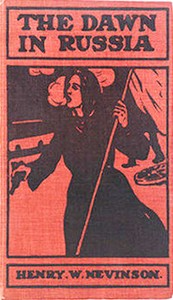
The dawn in Russia — Themes and Context
(0 User reviews)
3076
Project Gutenberg
2023
Not confirmed
Russia -- History -- Nicholas II, 1894-1917; Russia -- Politics and government -- 1894-1917; Russia -- Social conditions -- 1801-1917; Russia -- History -- Revolution, 1905-1907
Readers of public-domain and historical texts
Project Gutenberg digital edition
en
Edition facts
Words
88,482
Reading time
385 min
Text sections
25
The source record for The dawn in Russia — Themes and Context measures this digital text at 88,482 words, 6 hr 25 min estimated reading time, and 25 detected text sections.
The text analysis averages about 25.9 words per sentence, while the detected sections provide another way to judge how the source is divided.
Project Gutenberg metadata also associates the work with “Russia -- History -- Nicholas II, 1894-1917,” connecting these edition facts with the source record’s subject description.
Source:
Project Gutenberg record #69996
Nevinson's 1906 eyewitness account of the 1905 Russian Revolution, focusing on strikes, barricades, and the clash between revolutionary hope and commercial relief at the restoration of order.
Read the complete public-domain text at its original source.
Read on Project GutenbergNevinson opens his account with the Strike Committee meeting in the Hall of Free Economics, where delegates debate the eight-hour day and sing the Russian “Marseillaise.” The scene establishes a central tension: the exhilaration of public speech and collective action against the ever-present threat of reaction. Throughout the excerpts, Nevinson contrasts the fervor of revolutionaries with the relief of shopkeepers when martial law restores business. The barricades, he notes, were cleared methodically, like a servant putting away stage properties after private theatricals—a simile that captures both the absurdity and the tragedy of the uprising.
The Workman’s World
Nevinson devotes a chapter to the workmen’s home, detailing conditions along the Schlüsselburg Road: the river, the people, the Cossacks, and the casual massacres. He describes the Alexandrovsky ironworks, the mills, hours of labor, wages, prices, and the standard of living. The connection of work-people with villages and their passion for the land emerges as a recurring theme. The Peasant’s Congress and the Sevastopol mutiny are noted as parallel upheavals. Nevinson’s method is to ground revolutionary politics in material life—housing, rent, washing, holidays, amusements—showing how the strike movement grew from concrete grievances rather than abstract ideology.
The Oratory of the Street
In the chapter on Father Gapon, Nevinson reports a meeting of December 4th at the Salt Town, describing Gapon’s followers, the chairman Barashoff, and the Hymn of the Fallen. He observes the character of Russian oratory, the presence of police spies, and the moderate demands of the Gaponists opposed by Social Democrats. Nevinson’s conversation with Gapon probes his apparent nature and the charges of opportunism. The power of speech, he notes, was a sudden liberation after the post strike; newspapers burst forth, including The Russian Gazette, New Life, and satiric papers. Yet the Social Revolutionists had no paper, and the Radicals none—a division that Nevinson sees as dangerous.
The Barricades and the Shopkeeper’s Smile
Nevinson’s account of the Moscow rising culminates in the barricades and their aftermath. He describes a man methodically cutting a telegraph wire with a hatchet, rolling it up like a trusty servant clearing stage properties. The revolutionists received orders to abandon street fighting and scatter; some escaped, some refused, many were seized. Nevinson then shifts to the decree of Admiral Dubasoff commanding all shutters to be taken down and business resumed on pain of martial law. The shopkeeper’s heart was glad. Nevinson’s irony is sharp: he notes the indecency of joy while the dead lay in frozen layers at police stations, but allows that business habits are tiresome interruptions. The damage to house property was estimated at £10,000,000; the Sytin printing works, destroyed by the Government, was valued at £300,000. The restoration of law and order met a greasy smile.
The Cost of Order
Nevinson’s account of the Moscow rising culminates in the barricades and their aftermath. He describes a man methodically cutting a telegraph wire with a hatchet, rolling it up like a trusty servant clearing stage properties. The revolutionists received orders to abandon street fighting and scatter; some escaped, some refused, many were seized. Nevinson then shifts to the decree of Admiral Dubasoff commanding all shutters to be taken down and business resumed on pain of martial law. The shopkeeper’s heart was glad. Nevinson’s irony is sharp: he notes the indecency of joy while the dead lay in frozen layers at police stations, but allows that business habits are tiresome interruptions. The damage to house property was estimated at £10,000,000; the Sytin printing works, destroyed by the Government, was valued at £300,000. The restoration of law and order met a greasy smile.
Nevinson’s narrative is a reporter’s chronicle, not a history. He does not claim to have seen everything; he records what he witnessed and heard. Readers should attend to the voices he includes—workmen, delegates, shopkeepers, and the assassin—and to the silences: what became of the prisoners, he writes, “we only suspected at the time; we found out later.” The book is valuable as a contemporary document of how the 1905 revolution looked from the streets, before its outcome was known.
That grey afternoon, the rain against the windows seemed to echo Nevinson’s barricades, the communal breath held before a brutal dawn. I closed the book, struck by how hope curdles so quickly into necessity, and wandered sideways into the older revolution’s quieter, doomed intimacies. History of the Girondists, Volume I Personal Memoirs of the Patriots of the French Revolution — A Reader’s Guide holds the same fever, but softened by time’s distance.
There are no reviews for this eBook.
There are no comments for this eBook.
Reader reflection
Your personal reading reflection
Build a private reading journal entry for this title.
Your progress
0
/
10
2
Was reading this book enjoyable?
3
Would you encourage someone else to read it?
4
Did the language feel accessible?
5
How well did it match your expectations?
6
How did the pace of the book feel?
7
Which aspect of the book did you value most?
8
Could you apply anything you learned?
9
What changed or sharpened your thinking?
10