1

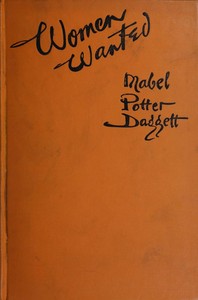
Women wanted: The story written in blood red letters on the horizon of the Great World War — Themes and Context
(0 User reviews)
836
Project Gutenberg
2022
Not confirmed
Women -- Employment; World War, 1914-1918 -- Women
Readers of public-domain and historical texts
Project Gutenberg digital edition
en
Edition facts
Words
101,735
Reading time
443 min
Text sections
18
Women wanted: The story written in blood red letters on the horizon of the Great World War — Themes and Context can be approached with a clearer sense of reading commitment from its source measurements: 101,735 words, 7 hr 23 min estimated reading time, and 18 detected text sections.
The text analysis averages about 17.5 words per sentence, while the detected sections provide another way to judge how the source is divided.
Project Gutenberg metadata also associates the work with “Women -- Employment,” connecting these edition facts with the source record’s subject description.
Source:
Project Gutenberg record #68257
Mabel Potter Daggett's 1918 report on women's wartime labor shifts uses concrete scenes—a woman's chamois bag gone, a typewriter rising—to argue that economic independence follows war service, with specific training programs and figures like Cecile Bornozi and Elizabeth Rachel Wylie.
Read the complete public-domain text at its original source.
Read on Project GutenbergDaggett opens with a sensory memory: the challenge “Who goes there?” from European war offices, and her hand automatically reaching for a chamois bag that no longer bulges under her skirt. That vanished bag—once holding her passport and papers—signals a personal transformation that mirrors the national one she documents. The book is not a dry survey but a first-person narrative grounded in specific, often tactile details: the feel of a tailored skirt, the chalk marks on a blackboard mapping trade routes, the phrase “Don’t darn” as a lesson in executive thinking. Daggett’s voice is direct, sometimes wry, and she positions herself as a witness who has moved through the same changes she describes.
From Chamois Bag to Typewriter
The opening chapter, “Glimpsing the Great World War,” establishes a pattern of personal anecdote leading to broader argument. Daggett recalls the weight of her chamois bag, then notes its absence: “to-day my tailored skirt drapes smoothly there.” That small, bodily detail—a woman no longer carrying identification papers—becomes a metaphor for the war’s erasure of old restrictions. She immediately pivots to the woman at the typewriter, whom she predicts will “take the chair before the mahogany desk in the president’s office.” The typewriter is not just a tool but a symbol of rising status. Throughout the excerpts, Daggett anchors her claims in such concrete images: the blackboard diagram of international trade, the sample of chiffon in a novice’s pocket, the instruction “Don’t darn.” These are not abstract arguments; they are scenes from a world being remade.
Training for a New Economic Order
Daggett devotes considerable attention to the institutions springing up to train women for commercial roles. She cites the Financial Centre for Women in New York, established “in direct response to the war demand,” which had already placed sixty young women in banks like the National Bank of Commerce and Morgan’s. The curriculum included “stop payments and certified checks, gold imports, cumulative and preferred shares”—terms Daggett lists with evident relish. She also mentions the Woman’s Association of Commerce of America, organized in Chicago, and the Paris School of Commerce for Women led by Mlle. Sanua. These are not generic references; Daggett names specific people and places. Cecile Bornozi, “the only railway woman in France,” is presented as an exception whose commercial knowledge came “through instinct and inheritance,” contrasting with the systematic training now available. The message is clear: the war has cracked open doors that were previously locked.
The Language of Commerce and Cloth
One of Daggett’s most striking rhetorical moves is her comparison of commercial and domestic vocabularies. She addresses an imagined male reader: “Suppose you, sir, were going to attempt to talk glibly in terms of chiffon and voile and chambray.” The point is that women have long mastered a specialized language of textiles, while men have absorbed the language of business from boyhood. Now, she argues, women need schools to teach them “commercial terms which you as a boy imbibed as naturally from your environment.” This is not a complaint but a practical observation. Daggett herself moves easily between both worlds, describing the “mystifying terms” of department stores and the “intricacies of the market” with equal fluency. The Financial Centre’s blackboard, with its chalk lines mapping furs from Russia, wheat from Canada, and sugar from Hawaii, becomes a visual representation of this new, global literacy.
Daggett’s book is best read as a contemporary dispatch, not a retrospective analysis. She writes in the midst of the war, and her evidence is drawn from what she has seen and heard: the parade of forty thousand women led by Mrs. Pankhurst, the training rooms in New York, the offices of Paris. Readers should attend to the specific names and institutions she records—they are the primary sources. The book’s value lies not in its predictions but in its documentation of a moment when the typewriter was rising and the chamois bag was put away.
I remember reading about those women's hands—how war gave them tools they'd never held before. It made me think of my grandfather's old copy of Lee and Longstreet at High Tide: Gettysburg in the Light of the Official Records — Edition Insights, where every map felt like a held breath. Both books whisper the same thing: history's biggest shift happens in the smallest, quietest movements.
There are no reviews for this eBook.
There are no comments for this eBook.
Reader reflection
How did this book work for you?
Your answers remain private and are stored only in this browser.
Your progress
0
/
10
2
How much did you enjoy the reading experience?
3
How likely are you to recommend this book?
4
How demanding did the text feel?
5
Could you follow the author’s main argument?
6
Did you gain anything practical from the text?
7
Did any part of the book feel personally relevant?
8
Which aspect of the book did you value most?
9
In one sentence, what did you learn?
10